
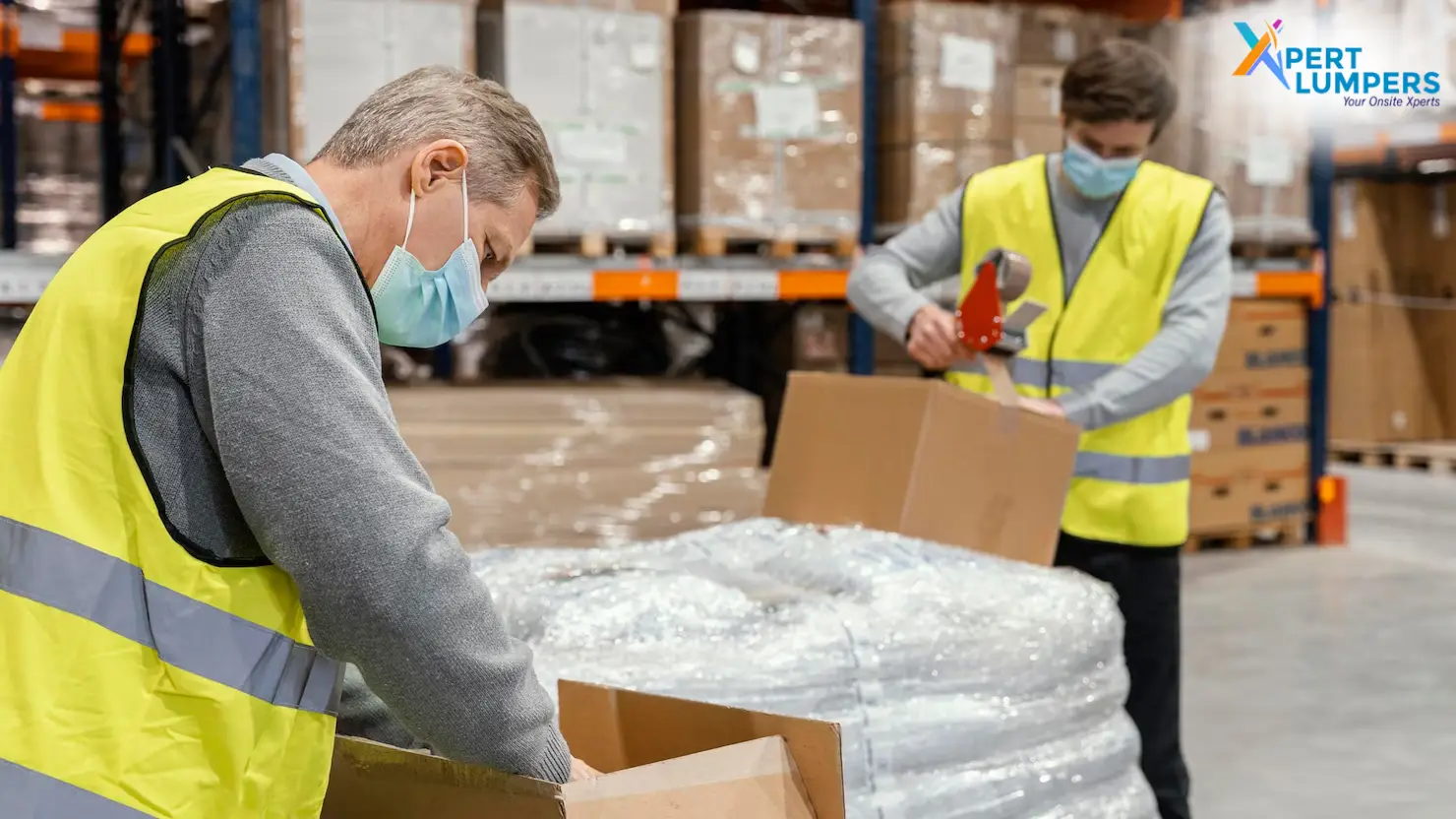
Repacking, Re-Palletizing, and Labeling: The Backbone of a Resilient Canadian Supply Chain
In the competitive landscape of the Canadian supply chain, efficiency isn't just a goal—it’s a survival strategy. As e-commerce continues to surge from Toronto to Vancouver, businesses are increasingly turning to specialized 3PL (Third-Party Logistics) providers for a critical trifecta of services: Repacking, Re-palletizing, and Labeling.
These aren't just "extra steps" in the warehouse; they are the backbone of a resilient, cost-effective distribution strategy. Here is why these services are essential for any modern logistics operation in Canada.
1. Repacking: Customizing for the Canadian Market
Repacking involves taking products from their original bulk containers and placing them into new, often smaller, or more retail-ready packaging.
Retail-Ready Requirements:
Major Canadian retailers like Loblaws or Canadian Tire have strict requirements for shelf-ready packaging. Repacking ensures your goods are compliant the moment they arrive.
Kitting and Bundling:
Whether you are creating holiday gift sets or "Buy One Get One" promotions, repacking allows for the physical assembly of multiple SKUs into a single unit.
Damage Control:
Sometimes, long-haul shipments from overseas arrive with "tired" or torn boxes. Professional repacking refreshes the brand image and prevents product loss before the items reach the consumer.
2. Re-Palletizing: Optimizing for Freight and Safety
The way a pallet is built determines how much you pay for shipping and how safe your goods are during transit across the Trans-Canada Highway.
Weight Distribution and Height Restrictions:
Different carriers and warehouse racking systems have specific height and weight limits. Re-palletizing allows logistics experts to break down oversized "skids" into manageable, stackable units that maximize truck space.
International to Domestic Standards:
Goods arriving at the Port of Vancouver on international pallets (like the 1100x1100 mm size) often need to be moved onto standard GMA pallets (48" x 40") common in North American warehouses.
Stability and Shrink Wrapping:
A poorly stacked pallet is a liability. Professional re-palletizing ensures that goods are interlocking and secured with high-grade stretch wrap, minimizing the risk of "pallet leaning" or collapse.
3. Labeling: The Key to Traceability and Compliance
In a world of automated warehouses, a missing or incorrect label is a digital "dead end." Labeling services ensure that every item can be tracked in real-time.
Bilingual Compliance:
In Canada, federal regulations often require bilingual (English and French) labeling for consumer goods. Repacking and labeling services help international brands quickly adapt their products for the Quebec market and beyond.
Barcoding and SKU Management:
Accurate UPC, EAN, or GS1 labels are essential for inventory accuracy. Logistics providers can apply custom barcodes that integrate directly with your Warehouse Management System (WMS).
Compliance Labeling:
For industries like food and beverage or pharmaceuticals, labeling includes critical data like batch numbers, expiration dates, and country of origin—non-negotiables for Canadian regulatory standards.
The Strategic Advantage: Why Outsourcing Matters
For many Canadian businesses, trying to handle repacking and labeling in-house leads to bottlenecks. By partnering with a 3PL that offers these Value-Added Services (VAS), you gain:
- Reduced Overhead: You don't need to invest in specialized labeling machines or extra warehouse labor.
- Scalability: During peak seasons (like Black Friday or Boxing Day), a 3PL can scale up repacking operations much faster than a standard retail warehouse.
- Cross-Docking Efficiency: Combining these services with cross-docking allows you to receive, repack, re-label, and ship out goods without them ever sitting in long-term storage.
Conclusion
Repacking, re-palletizing, and labeling are more than just warehouse tasks—they are the finishing touches that ensure your supply chain is agile and compliant. In the 2026 logistics environment, where speed and precision are paramount, these services provide the competitive edge needed to satisfy Canadian retailers and consumers alike.